


Breast Implant Removal in London
Dr Shweta Aggarwal | Consultant Plastic & Reconstructive Surgeon
Dual-trained Oncoplastic & Plastic Surgeon | Full Member, BAAPS & ABS | GMC: 5198687 | 1,000+ breast procedures performed
Clinics: Nuffield Health The Holly Hospital | Spire London East | Skin Care Network Barnet
What is breast implant removal?
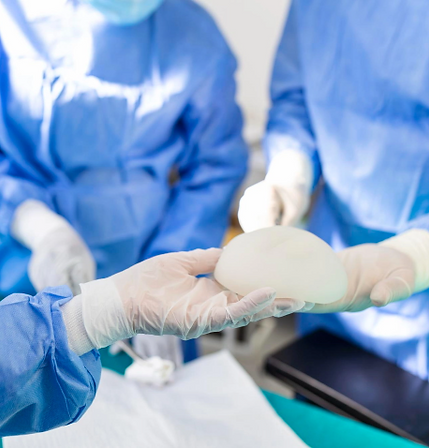
Breast implant removal, also known as explantation, is a surgical procedure to remove previously inserted breast implants. There are various reasons why individuals opt for breast implant removal, ranging from health concerns and complications to personal preferences and lifestyle changes. In this article, we will delve into the reasons for removal, the procedure itself, and important considerations for surgical intervention.
Reasons for Breast Implant Removal

Women choose explant surgery for a wide range of reasons. The most common I see in my London practice are:
1. Capsular Contracture :
-
The body naturally forms a layer of scar tissue around any breast implant — this is called the capsule. In most women it remains soft and unnoticeable. In others, the capsule thickens and tightens, causing the breast to feel hard, look misshapen, or become painful. This is capsular contracture, and it is one of the most common reasons for implant removal or exchange. Depending on severity, options include removal alone, removal with capsulectomy, or implant exchange with capsule management.
2. Implant Rupture :
-
Breast implants are not lifelong devices. Over time — typically after 10 to 15 years — the shell can weaken and rupture. With silicone implants, rupture may be silent and only detectable on MRI or ultrasound. With saline implants, deflation is usually visible quickly. A ruptured implant should be assessed promptly. Removal, with or without replacement, is the standard approach.
3. Breast Implant Illness (BII) :
-
Some women with breast implants develop a range of systemic symptoms — including fatigue, brain fog, joint pain, hair changes, and recurrent infections — that they attribute to their implants. This symptom cluster is referred to as breast implant illness.BII is not yet a formally recognised medical diagnosis, but the symptoms are real and consistently reported.
A meaningful proportion of women experience improvement following implant removal. I take a thorough, evidence-based approach to BII — investigating other potential causes first, then discussing surgical options honestly and without pressure.
4. Lifestyle Change or Change of Preference :
-
Many women simply decide, over time, that implants are no longer right for them. A preference for a more natural appearance, a change in lifestyle priorities, or a desire to feel more comfortable in their own body are all entirely valid reasons to consider removal. No medical justification is required for a decision about your own body. I approach these consultations with the same care and thoroughness as any clinical indication.
Your Procedure Options
Breast implant removal is not one operation — it is a family of procedures. The right combination for you depends on your reasons for removal, the state of your capsule, your breast anatomy, and your goals for how you want to look and feel afterwards.
Implant Removal Only :
Simple explantation removes the implant without disturbing the capsule. This is appropriate where the capsule is soft and undamaged, and there are no clinical indications for capsule removal. It is a straightforward procedure with a shorter recovery than more complex approaches. The breast will be smaller following removal, and the degree of sagging depends on implant size, skin quality, and how long the implants have been in place.
Implant Removal with Capsulectomy :
Where the capsule is thickened, calcified, contains ruptured silicone, or where there is a clinical indication such as suspected BIA-ALCL, removal of some or all of the capsule is appropriate.Capsulectomy can be partial (removing only the affected portion) or total (removing the entire capsule where safely achievable).

En bloc removal — taking the implant and capsule out as a single intact unit — is sometimes requested by patients, particularly those with BII. The current evidence does not show that en bloc removal produces better symptom outcomes than standard capsulectomy in most cases, and it carries greater surgical risk. I discuss the most appropriate technique for each patient individually, based on their anatomy and clinical picture.
Implant Removal with Breast Lift (Mastopexy) :
Following implant removal, many women are left with loose skin, reduced volume, and a degree of sagging — particularly where implants were large or had been in place for many years. A breast lift (mastopexy) can be performed at the same time as removal to reshape the breast, reposition the nipple, and create a firmer, more natural contour. Whether a simultaneous lift is appropriate depends on your anatomy and goals. In some cases, staging the lift as a separate procedure after the tissue has settled is the better approach. I discuss this with each patient in detail.

-
Implant removal and fat grafting – This procedure involves liposuction which can be tailored to your needs. The fat obtained by liposuction is then injected into the breast to restore part of the lost volume. It is unlikely that all of the volume can be replaced with fat grafting in one session. Fat grafting may be combined with a mastopexy to augment the volume and achieve better cleavage.
-
Implant removal and reconstruction with flap (skin and fat from under the breast or back). This can be combined with a reverse abdominoplasty (tummy tuck) or a body lift (back and love handles). If the skin and fat are taken from the back, these will result in additional scars.
-
Breast Implant Removal is not a uniform or standard procedure and you should think carefully about your reasons for implant removal and desired outcome. It is very important to have thorough consultation with your surgeon and explore all options to make an informed decision.

